Gear basics
Starter Gear for Phone Video
A complete kit for filming vertical video fits in a small bag. Here is exactly what belongs in it, and what does not.
In this guide
Start with what removes a visible problem
List the three problems you see most often in your footage before buying anything. Soft focus, uneven audio, shaky framing and mixed colour are the usual four. Each has a cheap solution and an expensive one, and the cheap one is normally enough.
Support and audio solve two of those four for a modest amount of money. Colour and focus are technique problems until you decide to buy lighting or a better phone.
The core kit
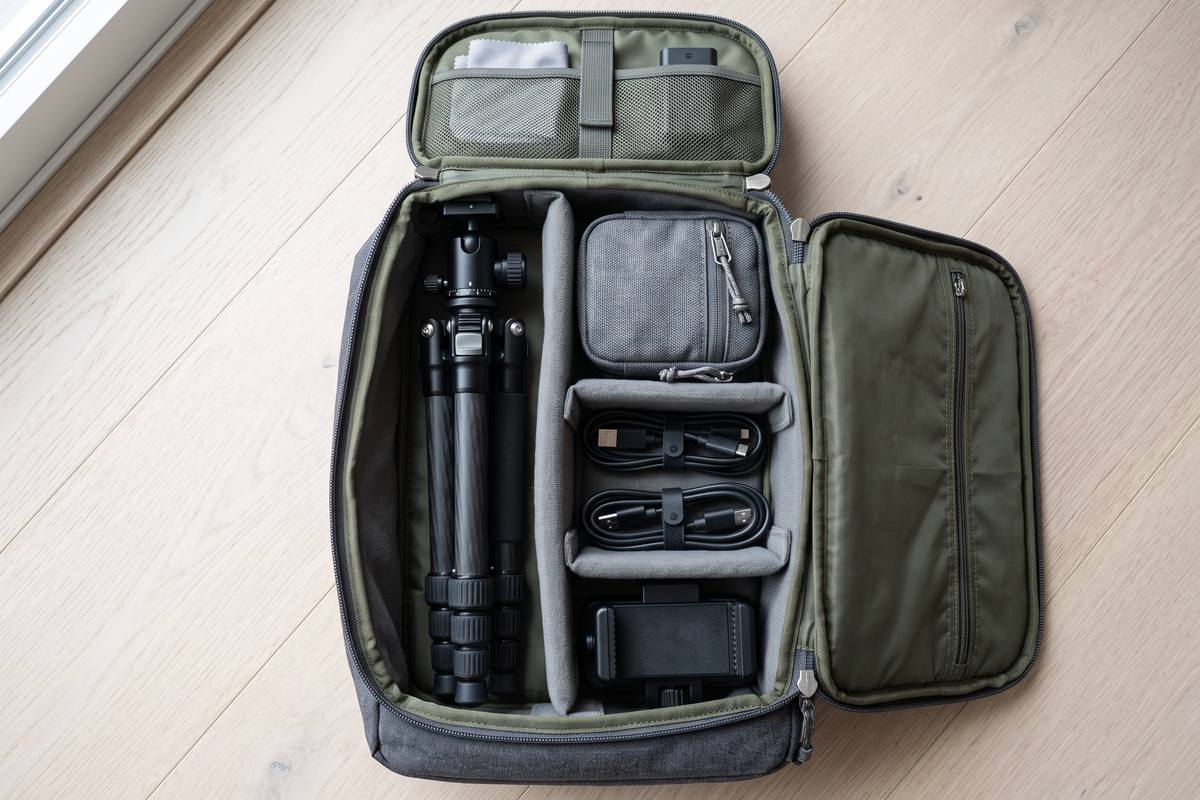
A compact tripod with a phone clamp, a clip-on microphone, one adapter cable, a power bank and a cleaning cloth will handle the vast majority of shoots. Add a small white card for bouncing light and the kit covers indoor interviews, product shots and street filming.
Choose a tripod that extends above your eye line and folds small enough to carry daily. A tripod you leave at home costs the same as one you never bought.
- Compact tripod, extends above eye level
- Phone clamp that fits with your case on
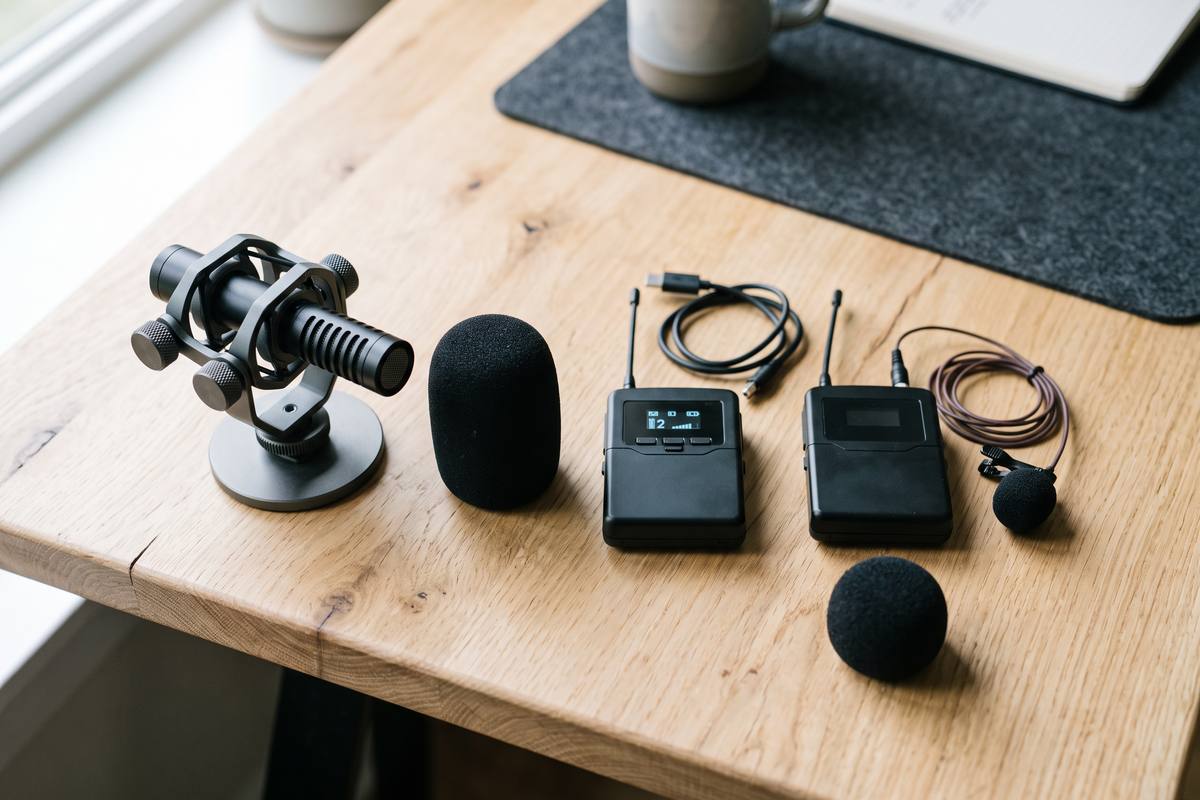
- Clip-on microphone with a short cable or a wireless kit
- One adapter from your phone's port to the microphone
- Power bank and a single charging cable
- Microfibre cloth, kept clean and separate
What to skip
Clip-on lenses, phone cases with built-in grips, ring lights and cheap wireless microphones are the four items we see most often in beginner bags and least often in use. Each adds bulk or complexity without solving a problem you could not solve by moving one step closer or finding a window.
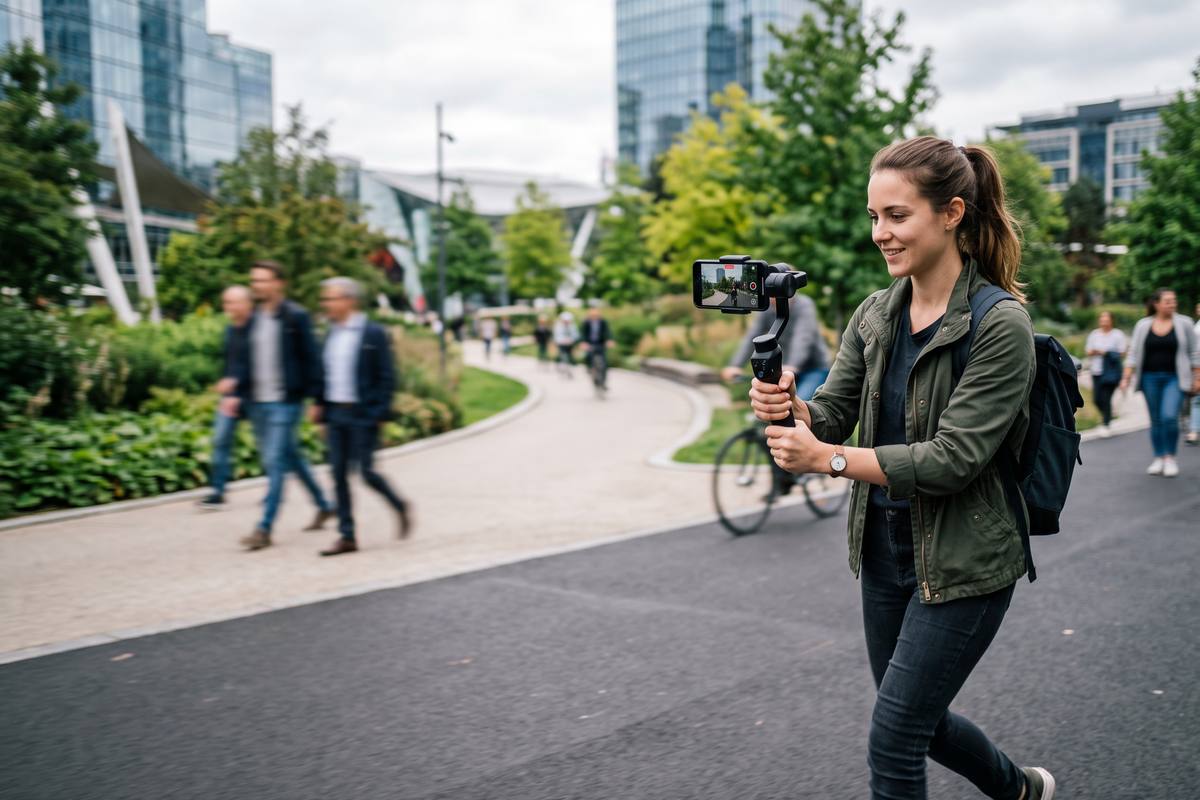
Filters and gimbals are not inherently bad: they are simply specific. Buy them for a planned shot, not as a general improvement.
Keeping the kit usable
Pack the bag the same way every time and put everything back at the end of a shoot. A kit with a fixed layout makes missing items obvious in seconds, which is the difference between a quick check and arriving on location without a mount.
Review the bag every few months and remove anything you have not used in three sessions. Small kits get carried; heavy kits get left behind.
Key takeaways
- Buy in the order: support, audio, power, lighting, movement.
- A tripod that reaches above eye level is the highest-value purchase.
- Skip clip-on lenses and stabilisers until a project specifically needs them.
- Film three videos with just the phone before you spend anything.
ReelKit Studio editorial teamWe buy and carry this equipment ourselves. Nothing on this site is sponsored, and we describe the free alternative before any purchase.
Do I need a case with a grip?
Not usually. A phone clamp is more secure and works with the case you already have, and it fits a tripod rather than replacing one.
How much storage should I keep free?
Enough for the whole shoot plus a margin. Filming at higher resolution fills storage far faster than most people expect, and running out mid-take is an avoidable failure.
Is a cheaper tripod good enough?
Check one thing: whether it holds the phone steady with the legs extended to eye height. If it wobbles there, it will wobble in every shot.